How an electrical infrastructure contractor ends up with fifteen systems
September 29, 2026Field Service Software
‘It’s crippling. I am tradie – I didn’t pick a trade to sit at a computer all day. My expertise is getting max productivity out on site, making sure the guys are safe and a great product to the customer’
That’s a site supervisor at a mid sized electrical contractor, describing his own week.
Nothing in his setup was broken. Every tool was set up for a reason, and every one of them does the job it was put there to do. Excel trackers, SharePoint registers, editable PDFs, email, specialist apps. Fifteen of them.
There was no bad system to point at. The cost wasn’t in any one tool, it was in the count.
The question the supervisor and his colleagues kept coming back to was a simpler one. Why is this so administratively intense?
Another operator framed it another way:
‘Why I am paying all this money for software and tools? It still a mission to get work done, it’s still manual taking my team hours, so what am I paying for?’
What fifteen systems actually feels like
Same job, fifteen places it might live, so the detail gets carried between them by hand.
The supervisor again:
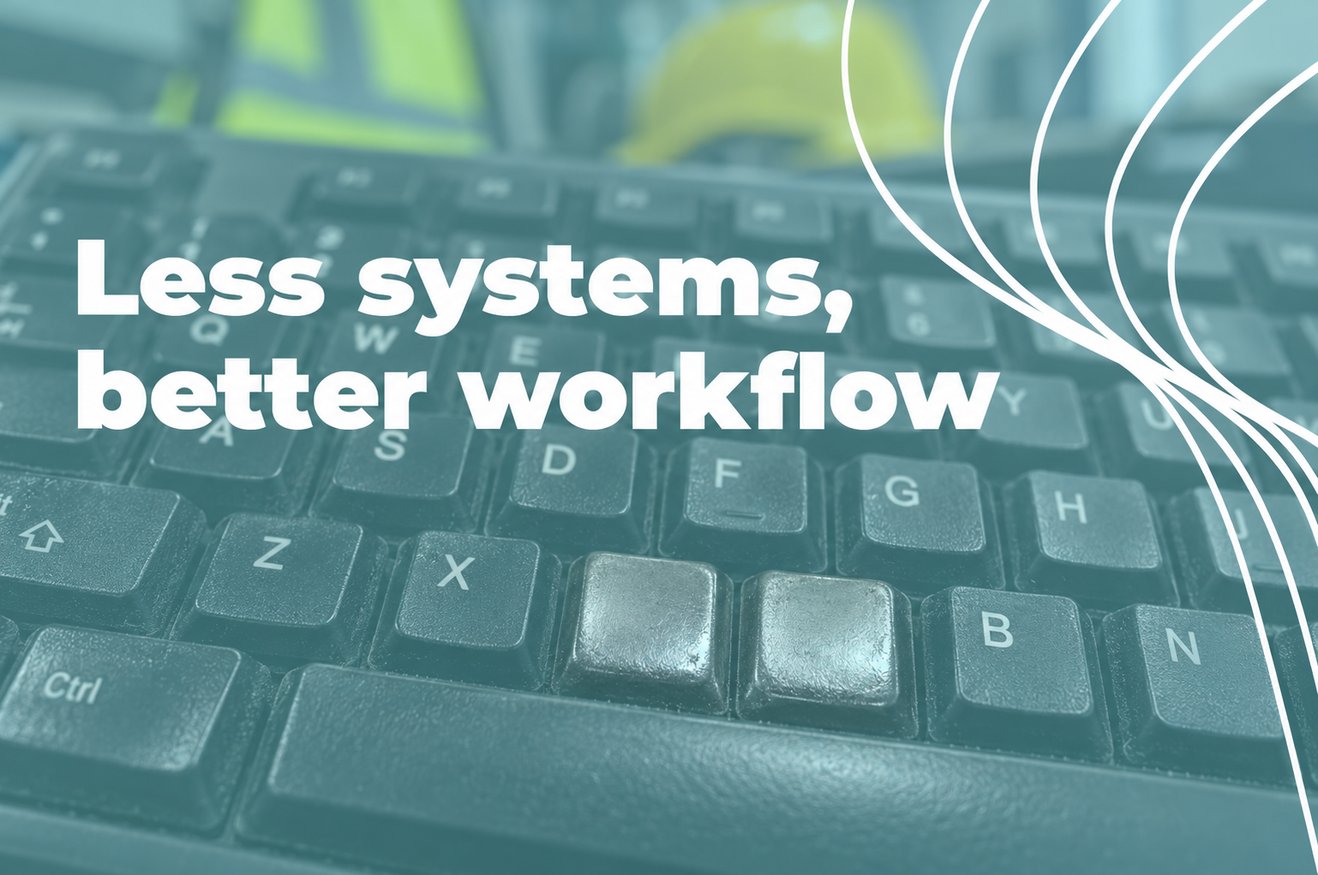
‘it’s control-C, control-V until the keyboard’s worn out. The keys are literally gone.’
He isn’t exaggerating for effect. The keys are gone. If you want one measure of what a fragmented stack costs a business, that’s it.
Copy and paste is only the visible half of it. The other half is the looking. A tech on site needs the site details, the last visit, the permit. Is this the client that needed a risk assessment on their jobs, and was that all jobs or just the annual PMs?
Someone in the back office needs the same job from the other end, the evidence it was done, in the format the client wants it in. Same hunt, different screen.
Eleven into one
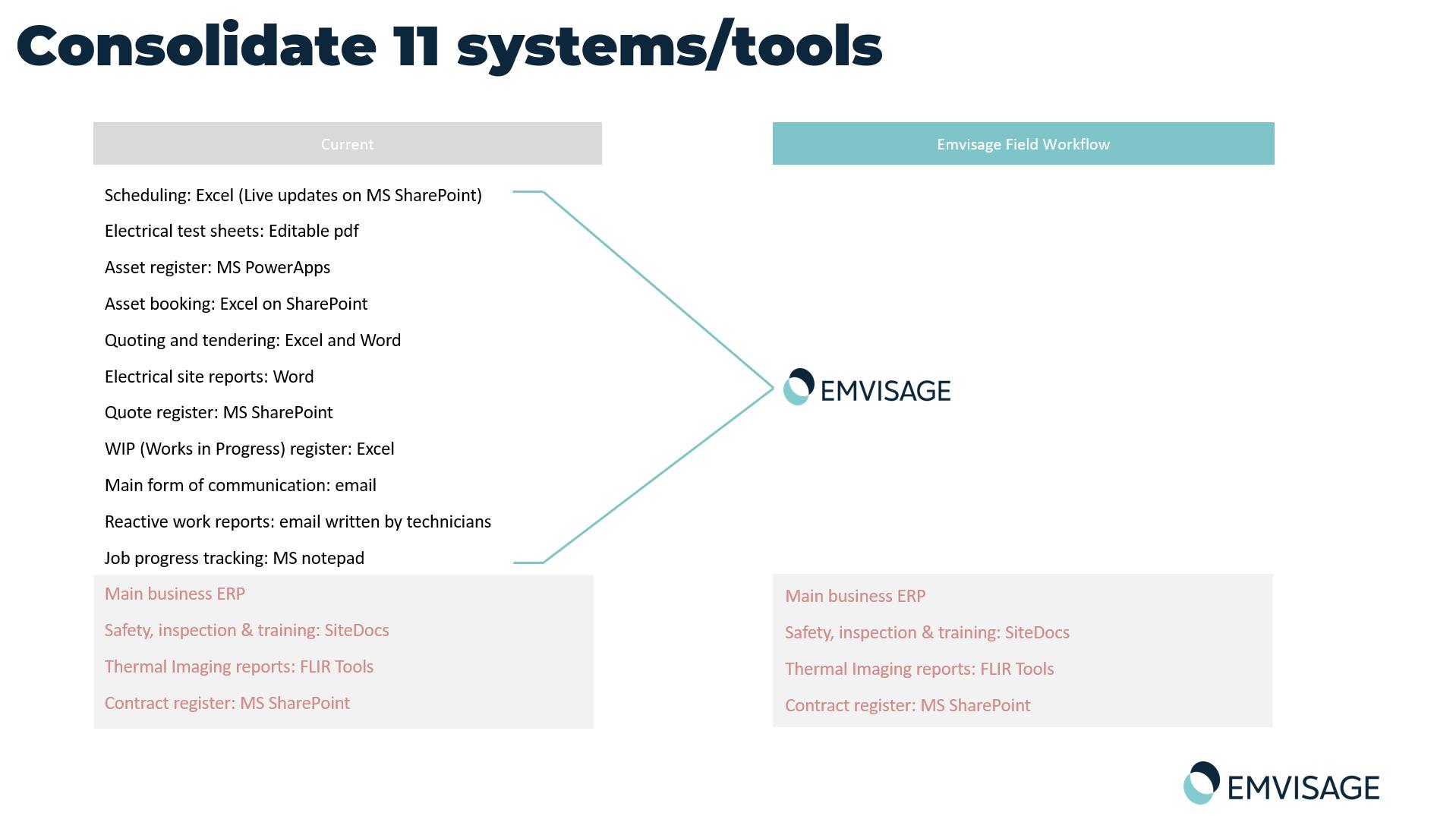 Eleven consolidate into Emvisage. Four stay.
Eleven of the fifteen fold into Emvisage. Scheduling, field capture, job reports, quoting, safety checks, and the trackers and registers stitched around them.
The number coming down isn’t the point. One place is the point.
The job, the forms, the photos, the quote, the report and the sign-off all sit against the same record, with a full history of who did what and when attached to it. The field looks in one place. The back office looks in the same place. Nobody rebuilds a job’s story out of an inbox and three trackers, and nobody retypes the same detail to keep two systems agreeing with each other.
Four systems stay exactly where they are: the main business ERP, SiteDocs, the FLIR thermal imaging and the SharePoint contract register. They’re systems of record in their own right, and none of them are part of the copy and paste problem.
List them all out
If your workflow is held together by multiple tools, by people remembering, and by data spread across trackers, registers, emails and shared drives, that’s the case for consolidating.
It’s hard to grasp the overhead on your team until you list them all out and walk the job end to end, step by step. That’s when it becomes clear why the work is so administratively intense.
One place for the work, and the history of it.
Take a look at your team’s keyboards. Or your own. If the C and the V have gone shiny, you already know.